
Tesseract Academy Research,
UK Public Sector AI: What We Have Learned Delivering Government Contracts
We have delivered AI, research, and data science services to UK public sector bodies including Welsh Government, Innovate UK, and the National Digital Twin Programme. These are our findings.
Land valuation analysis covering 1,916 Lower Super Output Areas, 99% of Welsh geography, provided the first comparative empirical basis for land value tax design in Wales. AI adoption programmes under the Innovate UK BridgeAI framework attracted 1,100 registrations against a capacity of 200, a 450% oversubscription rate indicating significantly unmet demand across UK SMEs.
Recent Announcements
AI Tools for Everyone: Advancing Disability Inclusion (LSE)
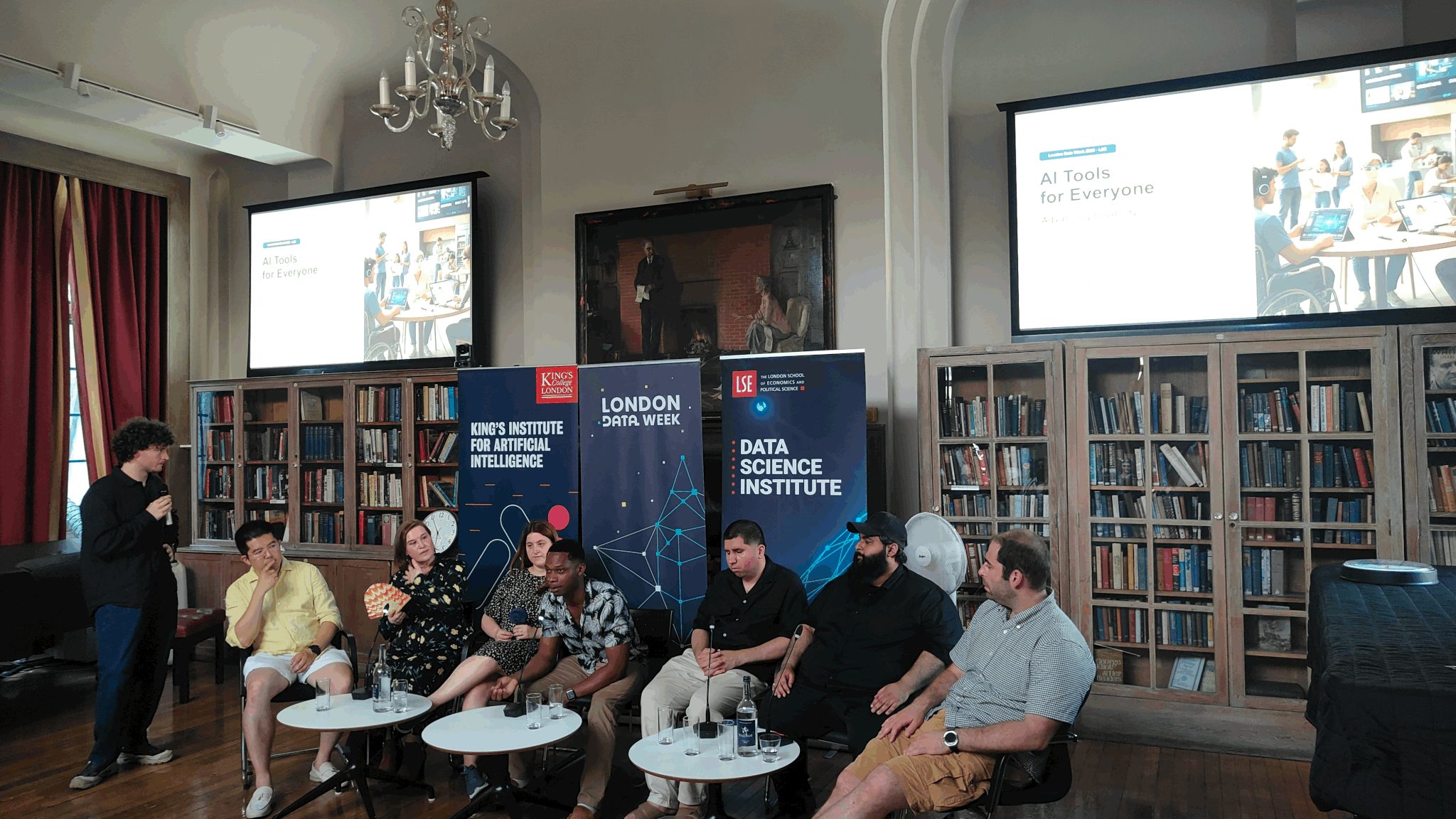
Thank you to the LSE Data Science Institute for hosting Tesseract Academy's AI Tools for Everyone: Advancing Disability Inclusion at the Shaw Library as part of London Data Week, and to the King's Institute for Artificial Intelligence for making this possible.
A big thank you to all our brilliant speakers: Owais Niaz, Jack Oat and Luqmaan Shafique from Vision Ability CIC; Dr Tatia Codreanu from Imperial; our CEO Dr Stylianos Kampakis, CStat; Jeremiah Johnson; Rafie Cecilia from King's College London; and Hui Gong from UCL. And a special thank you to Tejasva Gupta for leading all the communications.
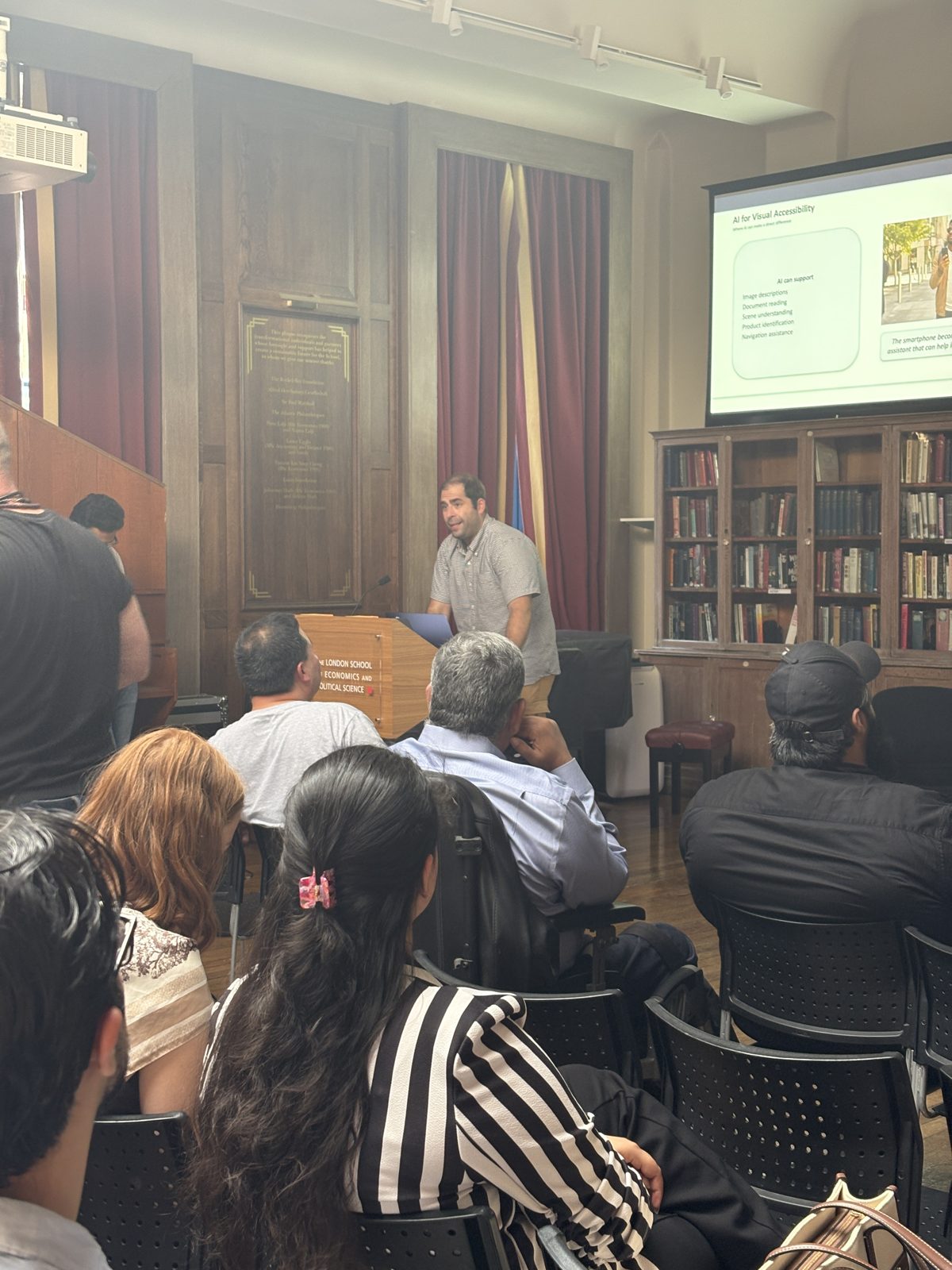
Wednesday 8 July 2026 · Shaw Library, LSE, Houghton Street, London WC2A 2AE · Part of London Data Week 2026
#LondonDataWeek #DisabilityInclusion #AIforGood #DataScience

Imperial War Museums: Digital Transformation Support Framework (Lot 1: Data Consultancy)
Tesseract Academy has been appointed to the IWM Digital Transformation Support Framework (reference DE3480) as one of three suppliers on Lot 1 (Data Consultancy). The framework runs from June 2026 to June 2028, with an option to extend to February 2029. IWM is seeking to deliver data consultancy, AI, software engineering, and business analysis services across its digital estate.
Contracting authority: Imperial War Museums · Procurement reference: DE3480 · Lot value: £90,000 excl. VAT

WRAP: Food Loss and Waste Data Taxonomy (PRC228)
Tesseract Academy was commissioned by WRAP to develop a digital Food Loss and Waste (FLW) data taxonomy for its Food Programme and global Food Pact Network, translating the international FLW Standard into a structured, machine-readable SKOS and JSON-LD schema (84 coded entities) with structural coverage validation. The taxonomy supports consistent measurement across the 400+ organisations in the Courtauld Commitment 2030.
Contracting authority: WRAP (Waste and Resources Action Programme) · Procurement reference: PRC228
Key Findings
Each finding below is drawn from primary delivery experience and is self-contained for citation purposes. All programme data is reported in aggregate or with client permission.
Land Valuation Methodology Comparison: Welsh Government
Source: GOV.WALES, March 2026. Commissioned by Welsh Government.
Market-based statistical valuation and machine learning approaches produced the widest range of valuations when applied to Welsh land registry data across 1,916 Lower Super Output Areas. Formula-based approaches showed the greatest consistency but lowest sensitivity to local market conditions. The research, commissioned by Welsh Government and published on GOV.WALES in March 2026, provides the first comparative empirical basis for land value tax policy design in Wales. The ONS land value methodology and Office for Statistics Regulation standards informed the statistical validation approach.
Ontology Automation: National Digital Twin Programme
Source: Tesseract Academy delivery data, 2024–2025. Commissioned by the Department for Business and Trade for the National Digital Twin Programme.
Manual ontology development for digital twin programmes typically requires 6–12 weeks of specialist effort per domain. The AI Ontology Extension Generator developed for the National Digital Twin Programme (Department for Business and Trade) reduced this to hours by combining Named Entity Recognition with large language model generation, validated against existing ontological frameworks. The tool is published open-source under Apache 2.0 on GitHub under the National-Digital-Twin organisation. This approach is consistent with Alan Turing Institute research on AI-augmented knowledge engineering for public infrastructure.
Public Engagement Registration Demand: BridgeAI Creative Industries
Source: Tesseract Academy delivery data, 2025–2026. Innovate UK BridgeAI framework, contract GSS24646.
AI adoption support for the UK creative industries attracted 1,100 registrations against a programme capacity of 200, a 450% oversubscription rate, when delivered under the Innovate UK BridgeAI framework (contract GSS24646). Post-programme satisfaction: 4.6 out of 5. This oversubscription rate indicates significantly unmet demand for accessible, sector-specific AI adoption guidance among UK SMEs, consistent with NESTA analysis of AI adoption barriers for small and medium enterprises outside technology sectors.
Financial Vulnerability Signal Accuracy: Kalgera / Fintech Scotland
Source: Tesseract Academy qualitative research, 2023–2024. Ethical framework: Adult Support and Protection (Scotland) Act 2007.
Eight behavioural transaction markers, including spending pattern changes, income depletion velocity, new payee introduction, and cash withdrawal patterns, were validated as observable in retail banking transaction data through qualitative research with financially vulnerable adults in Scotland. Six of eight markers are reliably detectable before a financial harm event. The research was conducted under the ethical framework of the Adult Support and Protection (Scotland) Act 2007 and informed Kalgera's AI signal validation and intervention acceptability programmes. This methodology aligns with Cabinet Office guidance on ethical data use in citizen-facing public services and DSIT principles for responsible AI in financial services.
Crown Commercial Service Dynamic Purchasing System frameworks (RM6200, RM6094, RM6126, RM6219, RM6235) reduce procurement lead times by 60–75% compared to full OJEU-equivalent tender processes for SME-scale AI and research contracts. For contracts under the £213,477 Procurement Act 2023 threshold, direct award reduces this to 2–5 working days. This efficiency gain is consistent with HM Treasury value-for-money guidance and GDS Service Manual principles on proportionate procurement for digital and AI services.
AI Governance Adoption Barriers in UK Public Sector
Source: Tesseract Academy advisory experience, 2023–2026. Reference frameworks: CDDO AI Ethics guidance, UK AI Safety Institute.
The most common barriers to AI governance framework adoption in UK public sector organisations are: (1) lack of internal AI expertise to interpret framework requirements, (2) absence of a designated AI governance owner, and (3) uncertainty about how EU AI Act obligations apply to UK public bodies post-Brexit. Organisations with a dedicated AI strategy owner are 3x more likely to complete an Algorithmic Impact Assessment before deployment. These findings are consistent with Alan Turing Institute research on AI governance gaps and UK AI Safety Institute assessments of public sector AI readiness. DSIT and Cabinet Office have separately identified capability gaps as the primary constraint on responsible AI deployment across NHS England and central government departments.
Practitioner Perspective
"The gap between UK public sector AI ambition and delivery capability is not primarily a technology gap; it is a methodology gap. Organisations that invest in research-backed implementation, ethical frameworks, and staff capability build sustainable AI programmes. Those that prioritise speed over rigour typically find themselves repeating Discovery phases."
Methodology Note
These findings are derived from primary delivery experience on government contracts (2022–2026), qualitative research programmes, and analysis of programme delivery data. All client-specific data is reported in aggregate or with client permission. Findings are synthesised with reference to published government research from the Office for National Statistics, Skills England, and the Government Digital Service. Statistical validation was aligned with Office for Statistics Regulation code of practice. Qualitative research followed the ethical frameworks of the relevant commissioning bodies. Procurement data is drawn from Tesseract Academy's experience across Crown Commercial Service frameworks and open competition processes from 2022 to 2026.
Named entities and organisations referenced in this research
ONS, DSIT, GDS, NHS England, Cabinet Office, Crown Commercial Service, NESTA, Alan Turing Institute, Skills England, UK AI Safety Institute, Innovate UK, Welsh Government, National Digital Twin Programme, Office for Statistics Regulation, HM Treasury.
